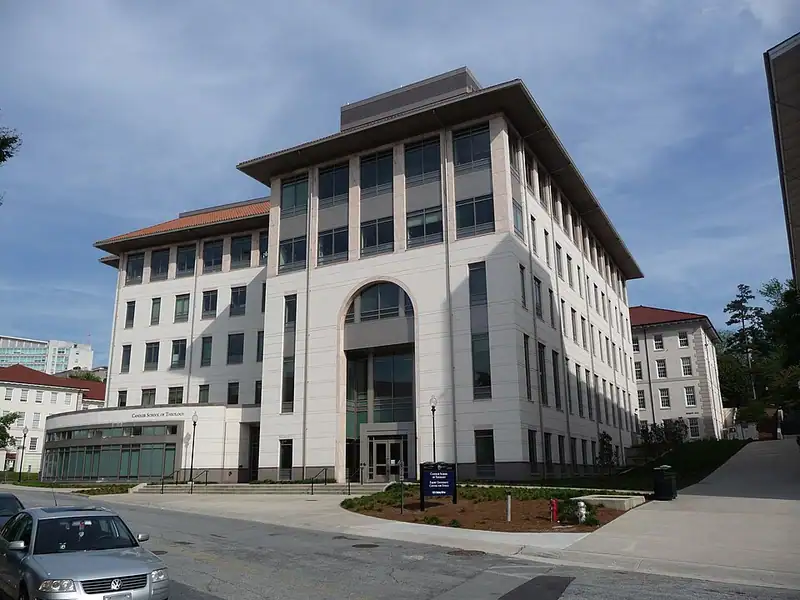
Emory University is a private nonprofit 4-year college in Atlanta, Georgia with 7,298 undergraduates. It admits 11% of applicants, costs an average of $16,754 a year after grants and graduates 91% of its students.
Figures from the U.S. Department of Education College Scorecard, released October 15, 2026. What each number covers.
Emory University acceptance rate and admissions
Emory University admitted 11% of applicants for fall 2024, about 1 in 9. The median acceptance rate at 4-year colleges is 77%.
Test scores: Considered but not required (as reported for fall 2024 admission). That means you can apply without SAT or ACT scores. Check the admissions office for the current policy.
SAT total
1470 to 1550
4001600
ACT composite
32 to 35
136
The colored band is the middle 50% of enrolled students in fall 2024 (reading and writing 720 to 760, math 750 to 790). The tick marks the typical 4-year college. Check how your scores fit.
Emory University application deadlines 2026-27
Round
Deadline
Early decision
Nov 1, 2026 (passed)
Early decision II
Jan 1, 2027
Regular decision
Jan 1, 2027
Next deadline: Early decision II, Jan 1, 2027. Application fee through the Common App: $75 for U.S. applicants. Confirm dates on Emory University’s admissions page; see every college on the deadline calendar.
Source: Common App 2026-27 first-year deadlines, fees and requirements grid, updated Sep 25, 2026.
Emory University tuition, cost and net price
Tuition and fees (2025-26)
$68,056
On-campus housing and food (2025-26)
$21,244
Total cost of attendance (2024-25)
$88,414
Average net price after grants (2024-25)
$16,754
Students who get federal aid pay an average of $16,754 a year after grants and scholarships, $71,660 less than the full cost of attendance.
What families pay, by income
Average yearly cost after grants for aided first-time students, by family income (2024-25):
Emory University graduation rate, earnings and debt
91%finished within 6 years96%came back for year two21%get a Pell Grant
91% of first-time, full-time students finished within six years (students who started in 2019).
Former students earned a median of $93,897 a year, 10 years after they started (students who received federal aid and were working).
Students who completed left with a median of $12,000 in federal student loans.
Earnings compared
Emory University$93,897
Georgia median, private nonprofit 4-year$51,757
U.S. median, private nonprofit 4-year$59,582
Debt compared
Emory University$12,000
Georgia median$23,838
U.S. median$23,250
Median debt is 13% of median earnings 10 years after entry. Many advisers suggest keeping total student debt below one year of expected pay. See the monthly payment.
Emory University majors and what graduates earn
Emory University awarded bachelor's degrees in 50 fields recently. The best-paid graduates four years out came from computer science ($159,541).
Four-year earnings: graduates of 2017-18 and 2018-19, measured in 2022 and 2023, in 2024 dollars. Fields with few graduates have no published earnings.
Graduate programs at Emory University
76 graduate programs awarded degrees recently. Largest first.
Emory University admitted 11% of applicants for fall 2024, according to the U.S. Department of Education.
How much does Emory University cost?
Tuition and fees for 2025-26 are $68,056. After grants and scholarships, aided students paid an average net price of $16,754 a year in 2024-25.
What SAT score do you need for Emory University?
The middle 50% of enrolled students scored 720 to 760 in reading and writing and 750 to 790 in math, and 32 to 35 on the ACT. Scores inside these ranges are typical for admitted students.
Is Emory University test-optional?
For fall 2024 admission, Emory University reported that test scores were: considered but not required. Policies change, so confirm with the admissions office.
What is the graduation rate at Emory University?
91% of first-time, full-time students finished within six years.
How much do Emory University graduates make?
Former students who received federal aid earned a median of $93,897 a year 10 years after they started, in 2024 dollars.
Similar colleges
Matched on location, type, selectivity, size, net price and graduation rate.